Showing posts with label Alaqua Inc. Show all posts

Wednesday, September 13, 2023

Discover the Benefits of Distillation Equipment

Distillation is an age-old process. Which finds many applications in industries like distilleries, etc. In the alcohol manufacturing industry, the distillation equipment is outfitted with efficient stainless steel corrugated packaging. In order to, ensure the final alcohol remains unpolluted, SUS304 stainless steel is used for all components in contact with it, including the tower, condenser, surge tank, and cooling coil. In various industries like oil refineries, petrochemicals, chemicals, perfumes, and gas plants, distillation plays a crucial role in separating liquid mixtures.
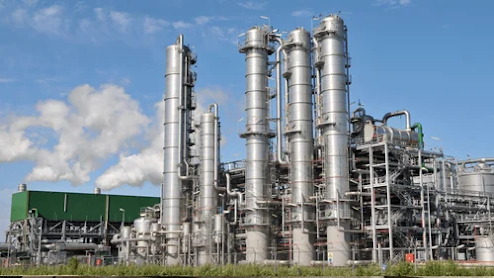
distillation equipment
What is Distillation Equipment and what is its significance?

Widely utilized, distillation heats a liquid mixture, vaporizes components at distinct temperatures, and condenses them through pipes. It is the primary method for extracting substances such as crude oils, alcohol, fragrances, and water. Typically, distillation involves two processes: evaporation and condensation, necessitating various types of distillation equipment.

Here's a closer look at the Distillation Process:

  1. Firstly, heat applies to a liquid mixture containing multiple substances, such as a blend of water and ethanol.
  2. Secondly, as the liquid heats, components with lower boiling points vaporize and ascend through a column. However, the vapor in the column still contains traces of other substances.
  3. Thirdly, the vapor becomes progressively purer as it ascends in the column, with heavier molecules returning to liquid form.
  4. Fourthly, Distillation equipment employs columns referred to as "stages," each representing an area in the column with a similar concentration of molecules for each substance. The height of the equipment is designed to achieve the desired level of separation.
  5. Fifthly, an industrial condenser collects the vapor, known as distillate, at the top of the column. It then cools and is it back into a storage tank in liquid form.
  6. Lastly, various systems, including batch systems and recirculation, ensure that the substances remaining in the column continue the distillation process until the desired purity is achieved.

Where is Distillation Equipment Utilized?

Distillation equipment finds applications in:

  • Separating crude oil
  • Purifying water by removing impurities
  • Brewing and distillery operation
  • Perfume manufacturing

Why is it Important?

  • First, it ensures the purity of desired substances.
  • Second, it aids in managing wastewater and preventing environmental pollution.
  • Third, it enhances project outcomes by delivering quality products.

Benefits Of Distillation Equipment:

The molecular still can be adjusted to achieve an extremely high vacuum. Molecular distillation, typically conducted at relatively low pressure, minimizes the risk of oxidation or destruction.

With a simple operating procedure and a compact equipment volume, it can produce non-toxic, pollution-free, residue-free, pure, and safe goods. Because the material's heating period is short and the distance between the heated liquid surface and the condensation surface is less than the typical free route of light molecules, light molecules leaving the liquid surface nearly always reach the condensation surface without colliding.

The product is extremely energy efficient. Compared to traditional distillation, molecular distillation incurs smaller losses in the separation process. The unique design of molecular distillation equipment enables it to attain exceptionally low internal pressure and reduced internal resistance, resulting in significant energy savings. Additionally, molecular distillation is characterized by significantly lower operating temperatures.

Benefits of Vacuum Systems with Distillation Equipment:

Integrating a vacuum system with distillation equipment allows for the distillation of solvents under reduced pressure. This lowers the boiling point of the solvent, enabling separation without excessive energy consumption for heating.

A leading provider of distillation equipment, evaporators, and crystallizers is ALAQUA INC. In fact, their distillation equipment incorporates a specially designed doctor blade to mix the waste solvent being distilled, resulting in a discharge in the form of powder and flakes, which are less hazardous than thick paste alternatives.

The Way Forward:

In conclusion, the significance of made in usa distillation equipment, cannot be overstated in various industries where purity, efficiency, and environmental responsibility are paramount. These precision-engineered systems, exemplified by ALAQUA INC's expertise, ensure the separation of substances with unmatched efficiency. By adhering to rigorous quality standards and innovative design, 'made in USA' distillation equipment not only delivers top-notch results but also contributes to the sustainability of projects and environmental stewardship.

Tuesday, August 22, 2023

The Definitive Guide to Heat Exchangers: Navigating the Essentials

There are several factors to consider when it comes to heat exchanger. What kind is best for your requirements? What are the fundamental concepts that underpin heat exchangers? How do you pick the best one for your needs? We will address all of these questions and more in this comprehensive guide. We'll begin by going over the fundamental ideas that underpin heat exchangers. Moreover,  we'll look at the many types of heat exchangers and their properties. Finally, we'll go through how to choose the best heat exchanger in the USA for your needs.

Heat Exchangers: An Overview:

Simply put, heat exchangers facilitate the transfer of heat between two fluids with different temperatures without any direct contact. In fact, this separation ensures no cross-contamination while maintaining efficient heat transfer.

Understanding heat exchangers is fundamental for many industries. These devices play a pivotal role in regulating temperature for various applications, ensuring optimal performance and safety. 

The Science Behind It: Thermodynamics

The very essence of heat exchangers lies in the First and Second Laws of Thermodynamics.

The First Law posits that energy cannot be generated or obliterated, only transformed. Also, For heat exchangers, this implies that the total heat energy remains consistent before and after the process.

The Second Law dictates that heat flows from warmer to cooler bodies. In a heat exchanger, this means heat always migrates from the hotter to the cooler fluid.

Design Elements of Heat Exchangers-

There's a rich tapestry of heat exchangers, each tailored for specific requirements. Key design characteristics include:

  • Flow Configurations

This pertains to the manner in which fluids navigate the exchanger. The primary configurations include concurrent, countercurrent, and crossflow.

  • Construction Methods 

In fact, metals dominate the construction materials for heat exchangers, especially in petrochemical operations. Each material offers unique attributes, influencing the construction method.

  • Static vs. Dynamic 

In static designs, fluids remain stationary. In contrast, dynamic versions keep the fluid moving, generally offering greater efficiency.

Heat Transfer Mechanisms:

Two principal mechanisms govern heat transfer in exchangers: single-phase and two-phase transfers. While the former involves no phase change, the latter capitalizes on the latent heat during phase transitions, offering a substantial heat transfer rate.

Key Types of Heat Exchangers:

Among the plethora of exchangers, the 'Shell and Tube' and 'Air Cooled' heat exchangers stand out.

  • Shell and Tube Heat Exchangers-

A bundle of tubes is housed within a shell. Fluids traverse these tubes, exchanging heat without mingling. Furthermore, this is the most popular choice due to its versatility and robustness.

  • Air Cooled Heat Exchangers-

Essentially a shell and tube exchanger minus the shell, with the added element of air. Fans often augment the cooling process, bolstering the forced convection effect.

Deciphering the Right Heat Exchanger for You

Selecting the perfect heat-exchanger requires considering:

  • Fluid Characteristics-

Understand the nature of your fluid, its flow rates, temperatures, and other crucial attributes.

  • Thermal Outputs-

Define the heat output you desire.

  • Size-

Therefore, a misfit in size either limits performance or results in wasted investment.

  • Cost-

Therefore, consider both initial and operational costs.

Applications of Heat Exchangers:

Two major applications include:

  • HVAC Systems-

Regulating air temperature by transferring heat between air and fluid.

  • Process Industries- 

These exchangers facilitate temperature modulation between two process streams.

Maintaining Your Heat Exchanger

Maintenance is imperative for the longevity and efficacy of heat exchangers. Regular cleaning, damage inspections, and timely repairs ensure their optimal functioning.

Furthermore, if you encounter issues, remember that expert engineers can troubleshoot and provide solutions, ensuring the continuous and efficient performance of your heat exchanger.

The Road Ahead

Consequently, heat exchangers, with their diverse designs and applications, play an essential role in numerous industries. Moreover, when in the process of selecting the perfect heat exchanger, it's crucial to take into consideration aspects such as the type of fluid, the expected thermal output, dimensions, and financial constraints. Engaging with a knowledgeable heat exchanger maker or manufacturer in the USA can provide you with an exchanger tailored to your precise requirements.

Thursday, November 10, 2022

What Equipment Is Used In Distillation ?

Distillation is the process that involves the conversion of a liquid into a vapor that condenses back to liquid form. Non-volatile solids separate from liquids through Purification. Laboratories use the Purification method to separate mixtures based on different conditions to change the phase of components of the mixture. We heat the liquid to force components that have different boiling points into the gas phase. There are many Distillation Equipment. 


To perform distillation there is apparatus used for the process. Let’s take deep down to gather more information about the equipment.

Pot Stills:

Pot stills are preferably used for making whiskey or rum. It works on a batch Purification basis. They are traditionally constructed from copper. Pot stills consist of different components that include the bottom part. We call it a kettle that we heat from the bottom, boils off the alcohol, and allows the vapors to go to a condenser and separate. We use pot stills to make aged and crafted spirits. It is a flavorful Purification device. 

Column Stills:

The other name of the column still is continuous or Coffey still. Column stills are of stainless stills. It comprises a tall column structure attached above the top of the boiling kettle designed to attain purer vapors. This column design still allows for deriving pure alcohol directly from the ferment. These stills come in use for industrial and mass commercial alcohol production. 

It divides into chambers using perforated plates. This should be heated at the bottom, so while pouring the ferment from the cooler top part and when it hits the stream, it vaporizes and sends the alcohol back to the top.


Wednesday, October 12, 2022

What equipment do we need for planting and maintaining food plots?

We need different equipment for planting and maintaining food plots. The type of equipment needed depends upon the size of the plot. The plot may be small or big.

The small plot needs limited equipment but the big area will need big and more equipment for effective work.  

Before the beginning of the work, you must evaluate what equipment you need or if you really need it or not. There is both cheaper and more expensive equipment. However, do not always go for the cheap one. It can also come in cheap quality. 


You can buy planting equipment from equipment suppliers. They also deal in the Plantation of Processing Equipment. 

Through this article, let's talk about some of the equipment in detail to know about them better. 

Equipment for planting and maintaining food plots:

  • Disk- A food plot installation requires a disk. It provides a proper seedbed where soils are loose and little thatch on the surface. If the plants grow after seeding, we get good seed-to-soil contact. The light disk cannot break the hard soils or sod. 

  • Sprayer- One can use a sprayer to apply herbicides. You can for the backpack sprayer or the one which you can mount or pull with the ATV. By using the correct herbicides you can accomplish brush and weed control. 

    Must wear personal protective equipment while using the sprayer for applying pesticides. 

  • Tractor- A tractor is generally necessary for a large food operation.  The size of the tractor depends upon the size, number, and accessibility of the plot. 

  • Drills and seeders- Conventional seeders and no-till drills place the seed correctly in the soil which promotes high rates of plant survival after germination. 

    If the seeds are planted too deeply, the germination of the seed will take time because the seed is not obtaining sunlight properly.

    In drills and seeders, there are separate boxes for large and small seeds. They can be placed at different depths by properly adjusting the drill. 

  • Fertilizer spreader- Forage in plants is fed by the nutrients in the soil. It is critical to maintaining long-lasting and high-yielding food plots.

    You can send the soil samples to the laboratory to analyze the amount and blend of fertilizer to use.  

  • Mower- To control weeds and manage overgrown plots, a mower is a necessary piece of equipment. To produce high-quality forage perennial plots should be mown periodically. 

    You can remove the weedy vegetation through a mower before tilling the soil to make the tilling easier with small equipment. 

    One can buy this equipment easily. Suppliers also supply Made in USA Distillation Equipment

  • Cultipacker- This equipment is used to firm soil in the seedbed before drilling or broadcasting seed. To firm the soil at the time of planting with packer wheels, the drills are designed in such a way that cultipacker may not be needed. 

    Other drills are not capable of doing that,  this is the reason we use cultipacker.

    It is a better tool after the broadcasting seed than dragging a piece of fence to cover seeds. With the cultipacker the depth of the seed is critical and firming is more uniform. 

  • ATV- You can ATV to grow small-scale food plots. The ATV should have the capacity to handle the necessary equipment. ATVs are manufactured with specific product engine sizes. These are not designed to tow heavy ground-tilling equipment. So excessive wear and strain on the transmission should be avoided.  Slowly pulling heavy loads for an extended period of time can cause overheating. 

  • Rotary hoe- A rotary hoe is similar to a rototiller. However, it operates from the power take-off and three-point hitch o a tractor. These units are used where there is a desire for finely tilled seedbeds. 

    After tilling with a rotary hoe, you can use cultipacker before planting to firm the seedbed. 

  • Disc- There are many sizes and configurations of discs. For large tractors, three-point hitch models or large remote hydraulics can be used. 

Wrapping it up:

As we have discussed above. There are various kinds of planting equipment are there that people can use. You can choose them according to the plot you are using. 

If you need any planting equipment you can contact ‘AlaquaInc’. They are also the Heat Exchanger Equipment Supplier and other industrial machinery. 

Wednesday, June 8, 2022

Self-Cleaning Evaporator With MVR Is The Way To Go!

Self-cleaning evaporators have been used for decades to deal with situations where tube fouling has caused major issues. For the past few years, Alaqua, a processing equipment such as evaporators supplier in the USA, for a variety of industries, has been actively working to deliver Multi-Effect Evaporator (MEE) facilities to treat problematic effluent from dye-stuff manufacturers.

Self-cleaning is one of the effects of these plants, as are forced circulation and other effects. The sole rationale for simply equipping one of the effects with the self-cleaning configuration is solely financial. Self-cleaning technology will cost more CAPEX, but it will increase the plant's availability and efficiency while also reducing cleaning expenses.

Self-Cleaning Evaporator With MVR Is The Way To Go!

So, choosing the effect that is most prone to fouling can help extend the period between cleanings significantly, but it also means that the other effects may still display fouling. This is one of the main reasons why a Mechanical Vapor Recompression (MVR) approach is so appealing: there will be only one effect. As a result, the question of which effect to use self-cleaning technology on is no longer relevant.

The vapor from evaporation is squeezed by a compressor to a greater pressure and temperature in an evaporator driven by an MVR (or MVC, which are synonyms). This greater temperature permits the vapor to condense on the evaporator's shell side of the heat exchanger. To put it another way, all of the energy consumed to evaporate or recover latent heat is reclaimed. This is only partially done in an MEE by definition. Of course, energy is required to run the compressor in the MVR, but the overall use of primary energy is greatly reduced.

Evaporators That Self-Clean By Using Fluidized Bed

The passage of solid cleaning particles through the tubes of a vertical shell and tube heat exchanger is how the self-cleaning fluidized bed evaporator works. The fouling liquid rises via the tube bundle of the heat exchanger, which contains specially designed intake and output channels. The solid particles are delivered to the fluid in the input channel using a patented distribution method to achieve a uniform distribution of particles throughout all tubes.

The particles (usually stainless steel or ceramic particles with a size between 1 and 4 mm) are fluidized by an upward flow of liquid, where they provide a moderate scouring effect on the heat exchanger tubes' walls, eliminating any deposit before it forms fouling. The particles detach from the liquid in the separator after the tube bundle is removed and returned to the inlet channel via an external downcomer, and the cycle is repeated.

Particles from the downcomer are pushed into the intake channel with a portion of the incoming flow to the heat exchanger, enabling the number of particles supplied to the inlet to be adjusted.

Many forms of fouling deposits, hard or soft, resulting from biological, crystallization, chemical, or particle fouling mechanisms, or a mix of these, may be efficiently treated with the self-cleaning evaporator.

MVR Design, Liquid Composition Effects, and Fouling:

The composition of the liquid, the compressor performance, and the needed heat transfer area all play a role in the thermal design of an MVR. The temperature increase delivered to the vapor is determined by the compressor design and selection, and the driving force for heat transfer between the condensing vapor and the liquid at the tube side is determined by the driving force for heat transfer between the condensing vapor and the liquid. The needed heat transfer area (HTA) decreases as the temperature difference increases. The compressor, on the other hand, will use more energy as the temperature rises.

The composition of the liquid has an impact on the required temperature rise. The reason for this is that salts, in particular, raise the boiling point. The temperature differential between vapor and shell is reduced by this boiling point elevation (BPE). If the BPE is 8, a liquid will boil at 108°C if the vapor from an atmospheric evaporating system is 100°C. When the two-stage compressor raises the temperature by 16°C, the vapor condenses at 116°C.

The heat transfer driving power is around 8 degrees at this point. There would be no driving power remaining in a single-stage compressor with an 8-degree temperature rise. The required heat transfer will be directly proportionate to the temperature difference once BPE has been taken into account. When the BPE is underestimated, the HTA chosen is likely to be too small, resulting in a ten-percentage-point capacity decrease.

Since fouling may readily lower the coefficient of transfer by 20% to 50% or more, the development of scales can have a significant impact on evaporation capacity. This is one of the reasons why self-cleaning technology is so appealing. It maintains plant capacity and avoids overdesign.

Compressors are used for the operational aspect:

Compressor functioning will necessitate minor facility maintenance. When compared to turbofans, root blowers require less maintenance and require less attention. Turbofan impellers spin swiftly and have a high tip speed, causing vibration difficulties if they become dirty.

Vibrations should be monitored and the fan should be turned off as soon as possible to avoid major damage. MVR compressors have a high level of reliability when it comes to compressor maintenance.

Conclusion:

To summarise, employing a self-cleaning evaporator with an MVR is the best approach to save primary energy while treating effluent and optimizing the self-cleaning heat exchanger's capacity.

Alaqua is USA-based processing equipment such as crystallizer, heat exchanger, solvent recovery, spray dryer, distillation, and evaporator supplier worldwide to various food, pharmaceutical, chemical, environmental, and power generation industries. They also offer various processing equipment services such as installation and commissioning, retrofitting, troubleshooting, etc. services for the abovementioned equipment. Contact them for queries, information, equipment, and services!