Friday, August 27, 2021

The Ultimate Guide To Solvent Recovery Systems | Alaqua Inc

Solvent recovery systems are the process of recovering and reusing solvents used in the extraction of cannabis. Chemical solvents are too costly, particularly in the commercial cannabis sector. Solvent recovery is a great technique to save money due to the high cost of solvents. Solvents used in cannabis extraction procedures, such as hexane, butane, propane, ethanol, and isopropyl alcohol, can be recycled and repurposed.

The solvents are collected and separated using distillery operations after they have been used. When the solvents approach boiling and condense into vapor, special distillery tanks are employed to heat and separate them. The steam vapor is collected and sent to an air-cooled condenser. The solvents cool to a pure liquid that may be reused after chilling.
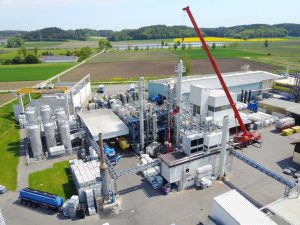
solvent-distillation-work

Work of Solvent Recovery System

Solvent recovery systems are based on distillation, which separates volatile and nonvolatile solutions in a solvent. Similar to how a vapor degreaser works, the solution is boiled, then the vapors are condensed back into liquid in a separate tank. Different elements of the solvent and pollutants boil at different temperatures: oils and soils generally boil at considerably greater temperatures than solvents. Paint thinner, which is used to remove paint from paint guns and parts, is an excellent illustration of this; because the solvent boils at considerably lower temperatures than paint, boiling the mixture results in the pure solvent in one tank and paint sludge components in another.

Fractional vs. Simple Distillation and How to Segregate Multiple Solvents?

Simple distillation attempts to separate one solvent in solution and recover the bulk of the solvent in solution, as described above and shown by the solvent recycling example. Simple distillation is the process of condensing hot boiled vapors directly from the solvent recycler’s boiling tank. Because condensing occurs so near to the boil “sump,” only one volatile solvent can be recovered, and the purity of the solvent may contain trace amounts of non-volatile contaminants carried by the boiling, volatile vapors. Vapor degreasers employ the same technique. While the recovery of a single volatile solvent can sometimes reach 99 percent or more, greater recoveries are occasionally required.

Latest Blog: Advantages of Continuous Distillation

Fractional distillation is used when greater purity recovery or separation of two or more volatile components (such as water and isopropyl alcohol) is needed. To achieve better purity solvent recovery and separation of various volatile solvents, fractional distillation employs a reflux column between the boiling tank and condenser coils. This approach has the potential to achieve 99.9% solvent recovery and 99.9% solvent purity, which is popular in electronic/PCB production, medical device manufacturing, and aerospace applications.

Utilized solvent recovery system and recycling benefits

  • Chemical waste from solvents is reduced.

  • Reduce your purchasing of new solvents.

  • Reduce the influence on hazardous waste producers’ permit status.

  • When utilizing safer but more expensive designed solvents, you can get a quicker return on your capital equipment.

  • Savings on storage

Alaqua supplies different types of processing equipment such as evaporators, crystallizers, solvent recovery systems, distillation equipment, and spray dryers to fulfill various industrial demands. Along with processing equipment, Alaqua also provides installation and commissioning services, fabrication of equipment, training of personnel, retro-fitting services, field, and troubleshooting services. Contact us today to know more! www.alaquainc.com 

Wednesday, August 18, 2021

Advantages of Continuous Distillation | Alaqua INC

Distillation, also known as classical distillation, is the process of selectively boiling and condensation to separate components or substances from a liquid mixture. Dry distillation is the process of heating solid materials to create gaseous products. ALAQUA is a US company that is a distillation equipment supplier along with other processing equipment suppliers.

Distillation can produce a nearly full separation or a partial separation that raises the concentration of specific components in a mixture. The method, in either scenario, takes advantage of variations in the relative volatility of the mixture’s constituents. Distillation is a unit operation with almost universal importance in industrial applications, however, it is a physical separation process rather than a chemical reaction.

cooling crystallizers

However, there appears to be a lot of misunderstanding and uncertainty about the benefits of continuous distillation, how it works, how expensive it is, and so on, but it is much less complicated than one might expect. The constant tag denotes that the equipment is never turned off. That also entails working a second or third shift merely to keep the machine running. However, this is to be expected when a distillery is ramping up output.

Selecting the proper distillation method is very important. Making this decision without adequate information can be challenging if you are unfamiliar with the two types of distillation procedures. Usually, there are two types of distillation equipment to select between batch and continuous distillation techniques. Because both of these approaches have their own set of advantages and disadvantages, it’s critical to learn more about each one before deciding which is best for you.

Basically, Batch and continuous distillation vary as batch distillation is done in batches, whereas continuous distillation is done continuously.

What is Batch Distillation?

Batch distillation is a technique for separating components from a mixture in small batches. The distillation procedure is used repeatedly in this method. It is simple to carry out batch distillation. The separated chemical is extremely pure, and the process is extremely flexible, thanks to this method.

A single distillation column can handle batch distillation. Multiple components can be divided into separate receiver tanks in this location. When the distillation of one batch is finished, the column can be swiftly and efficiently employed for a completely new component mixture. This can also be a fully automated process.

Batch distillation is extremely susceptible to contamination. That’s because, after one distillation, a trace quantity of the previous batch can linger in the system, contaminating the next batch.

What is Continuous Distillation?

Continuous distillation is a continuous technique for separating components in a mixture. Until the distillation is finished, there will be no disruptions in this process. For separation, this method is quite efficient as with batch distillation, there are no limits to the volume of mixture utilized for separation.

When compared to batch distillation, continuous distillation is a more expensive procedure. Continuous distillation necessitates more distillation columns than batch distillation; the number of columns necessary for continuous distillation is N-1, where N is the number of components removed from the distillation.

Advantages of Continuous Distillation

Efficiency and quantity are the two key benefits of a continuous distillation process. The batch size is determined by the still pot size when batch distillation is used. This is not a limitation of continuous processes. Only the amount of upstream feed storage limits the processing capacity.

It’s always been about economies of scale when it comes to distillation. Stop squandering your potential earnings and start living a better life: the benefits and advantages of continuous distillation are well worth the investment.

A Continuous Distiller may be scaled up or down according to your present demands, giving you more flexibility as your distillery grows and finds popularity. Why restrict yourself to a batch kettle that will require more man-hours to run in order to achieve the same yield?

Batch and Continuous Distillation

The quality of the alcohol will be enhanced by using a still configuration. Because there is a bigger surface area for the vapour to form, a fractionating column on top of the distillation flask improves the alcohol significantly. Small subsystems in certain distillation apparatus will hold boiling liquid mixtures in separate plates.

The process of steam distillation is used to make heat-sensitive chemicals. Thanks to the steam control valve, the temperature of the steam allow for a fast rate of heat transfer without a high heat transfer. Some of the target compounds will vaporize, and the resulting vapour will be cooled and condensed. Steam distillation is a common method for those who want to make their own essential oils because the vapour usually has a coating of water and oil in it.

ALAQUA provides made in USA distillation equipment along with other processing equipment such as evaporator, crystallizer, solvent recovery among others. We have over 25 years of experience in supplying food grade, sanitary and ASME code to crystallizer, evaporator, distillation, spray dryer, and solvent recovery systems for environmental, food, chemical, beverages, food and pharmaceutical industries. Contact us today to know more about this processing equipment!

For more info please visit on site - https://www.alaquainc.com/


Tuesday, August 10, 2021

Spray Drying Process: Application and Feature | Alaqua Inc

Spray drying is a process that uses hot gas to quickly dry a liquid or slurry into a dry powder. Many thermally sensitive products, such as foods and pharmaceuticals, as well as those requiring extremely constant, tiny particle sizes, favor this type of drying. The heated drying medium is air; however, nitrogen is used instead of the liquid that is flammable, such as ethanol, or if the product is oxygen-sensitive. Alaqua is a spray dryer supplier as well as other processing equipment suppliers like evaporators, crystallizers, heat exchangers, distillation equipment, and solvent recovery systems.


A spray dryer takes a liquid stream and turns the solute or suspension into a solid while vaporizing the solvent. A drum or cyclone is commonly used to gather the solid. A nozzle sprays the liquid input stream into a hot vapor stream, which is then vaporized. As the moisture from the droplets evaporates, solids form. To maximize heat transfer and the rate of water vaporization, a nozzle is typically utilized to make the droplets as tiny as feasible. Depending on the nozzle, droplet sizes can vary from 20 to 180 m. There are two types of nozzles: single-fluid high-pressure nozzles and two-fluid nozzles, with one fluid being the liquid to dry and the other being compressed gas.

When compared to other drying technologies, spray dryers can dry a product quite quickly. They also convert a solution (or slurry) to a dried powder in one step, simplifying the process and increasing profit margins.

Spray drying is used in pharmaceutical manufacturing to uniformly disperse Active Pharmaceutical Ingredients into a polymer matrix, resulting in Amorphous Solid Dispensation. This state will raise the energy level of the active chemicals (drug), allowing for easier drug spice dispersion in the patient’s body.

Principle of Spray Drying Method

There are a variety of drying processes available, but spray drying is the most popular. It entails atomizing the liquid to be dried into tiny droplets in the drying chamber, allowing the droplets to come into direct contact with and mix with the hot gas of the drying medium to evaporate the water, and then collecting the water via gas-solid separation to obtain a powder or granular product. A solution, an emulsion, or a suspension, as well as a molten liquid or a paste, may be used as the raw material liquid. Air, nitrogen, or superheated steam can all be used for drying.

Applications of Spray Drying Method

The spray drying method is particularly popular among customers in the pharmaceutical and food industries because spray drying machines can meet the GMP criteria in both fields and provide superior results. It works well for drying and granulating Chinese and Western medications and foods. Granules made for tableting, capsule filling, granules, and solid drinks have strong disintegration, good fluidity, and fast solubility, and can be used directly for tableting, capsule filling, granules, and solid beverages.

In dye drying, the spray drying process is also used. Fine powder, super-fine powder, dust-free powder, and hollow granules can all be drily dyed using it. This procedure is divided into three groups:

  • Airflow Atomization, which uses compressed air or water vapor to atomize the material liquid;
  • Pressure Atomization, which uses a high-pressure pump to force the material liquid out of the nozzle at a high rate, resulting in a mist;
  • Rotary Atomization, where the liquid material is introduced to the atomizer’s high-speed spinning disc (7000–28000r / min), then swiftly flung out and atomized. The dyestuff business prefers the third type, rotational atomization, because it has a good effect, takes little time, and has high labor productivity. However, it necessitates a significant capital investment and substantial energy usage.

Spray drying is an example of material drying technology that has been implemented in a systematic way. The moisture swiftly evaporates in contact with the heated air once the material is atomized in the drying chamber, resulting in the dried product. Evaporation and crushing can be avoided with this strategy. Quick heat transfer, short water evaporation, and quick drying time are all advantages of spray drying. It can speed up the dissolution of some formulations, making it ideal for heat-sensitive medications. Microcapsules can also be made by spray drying. FOr more info please visit on Site - www.alaquainc.com

Advantages of Spray Drying Method

  • Process of rapid drying
  • Drying materials directly into powder is possible.
  • It’s simple to tweak product quality criteria and vary drying conditions.
  • In the drying chamber, there is a slight negative pressure, which ensures hygienic conditions in the manufacturing process, prevents dust from blowing around the workshop and increases product purity.
  • There are fewer operators and higher manufacturing efficiency.

High-quality products with a large production capacity Several hundred tonnes of spray can be applied in an hour.

Disadvantages of Spray Drying Method

  • The machinery is complicated, covers a wide area, and demands a significant financial investment.
  • A spray dryer and powder recovery system costs a lot of money.
  • The heat consumption is significant and the thermal efficiency is low.

Wednesday, July 28, 2021

What is the role of a crystallizer?

 A crystallizer is heating equipment that transforms amorphous PET into a semi-crystalline state from virgin, post-process, or scrap PET.

Processors who produce or use considerable amounts of scrap or recycled PET material need crystallizers. Because processing converts virgin PET to amorphous PET, which cannot be reprocessed in high concentrations, those who must re-use this material has only two choices:

  • Process a small percentage of amorphous PET regrind (10% or less) with virgin PET, or blend a small percentage of amorphous PET regrind (10% or less) with virgin PET before processing.
  • Using a crystallizer, “re-crystallize” the amorphous PET regrind to a semi-crystalline form (similar to virgin PET).


What is the function of a crystallizer?

A crystallizer raises the temperature of granulated amorphous PET to slightly below its melting point, but above its glass transition temperature. When heated PET reaches its "crystallization" temperature, the amorphous PET molecules rapidly change state: Crystalline structures develop and align inside the molecules, and the material transitions from an amorphous to a semi-crystalline state.

When the transformation is complete, the “crystallized” PET is ready for drying (if necessary) and processing in the same way that virgin PET is. When amorphous materials are heated during drying, they tend to clump together since they haven't crystallized. Several issues arise from agglomerated materials: 1) They cause insufficient residence time for some materials by disrupting smooth mass flow through a drying hopper. 2) Agglomerated clumps are difficult to dry because of their huge size, and they are more prone to retain moisture than is desirable. 3) Agglomerated clumps can become caught or bridged in downstream processes, resulting in a slew of other material handling problems.

Depending on the capabilities of your crystallizer equipment, crystallization can be done in a continuous or batch process. Crystallizers are typically sized according to the amount of material that can be crystallized in an hour.

What are the types of crystallizers?

Majorly the crystallizers are of two types mentioned below:

  1. Hot-air hopper Crystallizers
  2. Infrared Drum (IRD) Crystallizers

1.      Hot-air hopper Crystallizers

The crystallizers are similar to dryers in many ways: Material is fed into a hopper, heated to a precise temperature with warmed air, and then discharged into a downstream process. A hopper-type crystallizer and a dryer, on the other hand, have numerous key functional differences:

·         Crystallizers use ambient air: In an open-loop crystallizer, heated ambient air is used, rather than dry/desiccated air in a closed-loop system (however, closed-loop systems are available). While some drying may occur as a result of the heating and crystallization process, crystallization does not provide the same level of moisture control as drying. If the recrystallized PET is still damp, it must be thoroughly dried before use.

·         Crystallizer hoppers use an agitator: Mechanical agitation is required within the hopper to keep amorphous PET material moving, break up clumps, and ensure that it flows easily before and after the crystallization process because it can become sticky as it is heated to its crystallization temperature.

2.      Infrared Drum (IRD) Crystallizers

Infrared Drum (IRD) crystallizers are distinguished from hopper-type crystallizers in a number of ways:

·         Infrared Heat Source: An infrared emitter, located in the drum's middle heats material directly as it rotates in the drum, eliminating the need to inject heated air.

·         Rotating Horizontal Drum: Instead of a vertical hopper, the IRD employs a horizontal rotating drum. Slow, continuous rotation reduces clumping, ensures complete material mixing, and removes the need for the agitator found in traditional vertical crystallizer hoppers.

·         Can Simultaneously Crystallize and Dry: The powerful infrared source heats pellets more quickly, causing moisture to rise to the top and be transported away by a steady stream of cool, ambient air. While IRD crystallizers can remove 90% or more of the moisture from a material, which is a far larger percentage than hopper-type crystallizers, they can't give the precision moisture removal that a specialized desiccant dryer can.


Alaqua is the best crystallizer supplier in USA along with other processing equipment such as the evaporator, solvent recovery, and other equipment to serve various industrial requirements. Alaqua supplies processing equipment such as crystallizers made in the USA worldwide for various food processing, pharmaceutical, and various chemical industries. To know more contact us today!

Thursday, July 22, 2021

Solvent Recovery System and Disposal Recycling System | Alaqua Inc

The solvent recovery systems process takes effluents and extracts valuable solvents and raw materials from the waste stream of a manufacturing process. A variety of procedures or technologies can be used to recover solvents from wastewater. Solvent recycling machines perform distillation to remove dirt, debris, and oils from old cleaning solvents, allowing the cleaning solvent to be reused. Solvent recovery systems for old solvents can cut solvent purchases by more than 95% and chemical waste disposal costs by more than 90%.

Almost any solvent or chemical used in electroplating, metal finishing, paint and powder coating, parts washing, and vapour degreasing can be recycled using solvent recycling equipment.


How Does Solvent Recovery System Work?

Distillation separates volatile and nonvolatile solutions in a solvent, and this is how solvent recovery systems work. Similar to how a vapour degreaser works, the solution is boiled, then the vapours are condensed back into liquid in a separate tank. The temperature at which the various elements of the solvent and impurities boil differs: usually, oils and soils boil at significantly higher temperatures than solvents. Paint thinner, which is used to remove paint from paint guns and parts, is a good example of this; the solvent boils at considerably lower temperatures than paint, therefore boiling the mixture results in a condensed pure solvent in one tank and paint sludge components in another.

Simple vs. Fractional Distillation And Separation Process of Multiple Solvents

Condensing hot boiled vapours directly from the solvent recycler’s boiling tank is referred to as simple distillation. Only one volatile solvent may be recovered since the condensing takes place near to the boil “sump,” and the purity of the solvent may contain trace amounts of non-volatile contaminants conveyed by the boiling, volatile vapours. Vapour degreasers work in the same way. While the recovery of a single volatile solvent can reach 99 per cent or greater in some cases, higher recoveries are sometimes required.

 Fractional distillation is used when better purity recovery or separation of two or more volatile components (for example, water, and isopropyl alcohol) is required. To achieve greater purity solvent recovery and separation of distinct volatile solvents, fractional distillation uses a reflux column between the boiling tank and the condenser coils. This technique can achieve 99.9% solvent recovery and solvent purity above 99.9%, which is frequently required for electronic/PCB manufacturing, medical device production, and aerospace applications.

Vacuum-Assisted Distillation

Higher boiling and heavier-than-air (vapour density greater than 29 AMU – atomic mass units) solvents, such as xylenes, CFCs, and others, may necessitate the use of a vacuum on the distillation column and chamber vs. alcohol, MEK (Methyl ethyl ketone/butanone), lighter-than-air acetones, MPK (Methyl n-Propyl Ketone), etc.

Benefits of a Waste Solvent Recovery System and Recycling

  • Reduce your purchasing of new solvents

  • Chemical waste from solvents is reduced

  • Reduce the impact on the permit status of hazardous waste generators

  • Savings on storage

  • When employing safer but more expensive designed solvents, you can get a quicker return on your capital equipment

  • ALAQUA is a company based in the USA that supplies solutions and equipment worldwide to meet various processing demands and requirements. We supply different types of processing equipment to meet various industrial demands. Along with processing equipment, Alaqua also provides services such as fabrication of equipment, installation and commissioning services, training of personnel, retro-fitting services, field services and troubleshooting services. Contact us to know more about our services and processing equipment. For more info please  visit on Site - https://www.alaquainc.com/ 


Tuesday, July 6, 2021

Selecting the Evaporators Based On Processing Requirements | Alaqua Inc

Pharmaceuticals, pulp and paper, foods and drinks, polymers and resins, chemicals, inorganic salts, acids and bases, and a variety of other materials are all processed using evaporators. Evaporators technology come in a variety of shapes and sizes, and the optimal one out of them is determined by the product's qualities and intended outcomes.

Evaporation is a technique for concentrating a solution containing a nonvolatile solute and a volatile solvent, which is usually water. To create a concentrated solution, slurry, or thick, viscous liquid, a portion of the solvent is vaporised. The difference between evaporation and drying is that the residue is a liquid rather than a solid. Evaporation differs from distillation in that the vapours are not separated into their constituent parts. It's possible that the desired product is the vapour, concentrate stream, or both. As a result, the evaporator should be constructed to separate the vapours from the condensate and feed in a clean and efficient manner.


A heat exchanger or heated bath, valves, manifolds, controls, pumps, and a condenser are all components of an evaporator. Jacketed tanks, tubular heat exchangers, plate-and-frame heat exchangers and agitated thin-film evaporators are among the most commonly used designs. At least, a well-designed evaporator must:

  • Be cost-effective for installation, operations, and maintenance, it must be designed to efficiently transmit heat at a high rate with a small surface area
  • Separate the vapour from the liquid concentrate with ease
  • Meet the requirements of the product being processed
  • Produce a product that satisfies the quality requirements
  • Make optimal use of steam via multiple-effect evaporation or vapour recompression where possible to save energy
  • Fouling on heat transfer surfaces should be kept to a minimum
  • Be made of corrosion-resistant materials

Product Characteristics and Critical Operations

The critical operational and product parameters of the solution to be evaporated play a big role in determining which evaporator type is best for the job.

  • Heat Sensitivity: Many foods, pharmaceuticals, chemicals and resins are heat or temperature-sensitive, necessitating modest heating temperatures, a short time exposed to the heat, or both. This can be accomplished by reducing the product's bulk boiling temperature by operating the evaporator at lower pressures, as well as minimising the volume of product in the evaporator at any given time. Lowering the internal working pressure while maintaining an appropriate heat-exchanger driving power may also allow lower heating temperatures to be used (difference in temperature between the bulk product's boiling point and the heating medium's temperature).
  • Fouling: Solids in the feed, precipitating solids in the concentrate, and product degradation are the most common causes of fouling of heat exchanger surfaces. The overall heat-exchanger coefficient will gradually decrease when a layer forms on the heat transfer surfaces over time. This will eventually necessitate the process being shut down and the heat transfer surfaces being cleaned, resulting in production downtime and more maintenance labour.
  • Foaming: During the vaporisation of a product, it is normal for it to foam. It can range from a tiny amount of readily broken unstable foam to a very stable foam that tends to fill the entire void of the evaporator system. Specific designs for the feed inlet (separation of feed from vapour stream) and the vapour/liquid separation area (special disengaging design) can typically reduce foaming. Reduce the boiling intensity of the liquid on the heat transfer surface (by operating at a lower temperature or at higher pressure) and the vapour velocity in the tubes to reduce foaming. Antifoam may solve or considerably decrease the problem if the product purity criteria allow it.
  • Solids: To reduce foaming, lower the boiling intensity of the liquid on the heat transfer surface (by operating at a lower temperature or higher pressure) and the vapour velocity in the tubes. If the product purity criteria allow it, antifoam may solve or significantly reduce the problem.
  • Viscosity: The overall heat-exchanger coefficient decreases as the viscosity of the concentration increases.
  • Distillate-to-concentrate Ratio: In general, enough liquid must move through the evaporator to wet the heated walls. Due to a lack of wall wetting and fluid velocity, particles on heat transfer surfaces may foul and salt, resulting in reduced heat transfer and possibly product quality degradation due to hot spots on the heating surface. Recycling of portion of the concentrate may be necessary for operations that need high distillate-to-concentrate ratios.
  • Distillate vapor velocity (pressure drop and entrainment): In the evaporator tubes and heating jackets, the vapour velocity must be considered. To achieve adequate heat-exchanger coefficients without exceeding pressure drop, erosion, or entrainment limits, sufficient velocities are required. The vapor/liquid separator's specifications for separation efficiency and pressure drop must be carefully considered.
  • Heat transfer Medium: The type of evaporator chosen could be influenced by the heat transfer medium. Evaporators that are heated by liquid have lower overall heat transfer coefficients and require a larger heat transfer surface. If the product is temperature-stable, hot oil heating can help overcome the reduced heat-exchanger coefficient. This could allow a smaller evaporator to be used in some circumstances.
  • Materials required of construction: The required materials of construction may be a crucial factor to consider when choosing an evaporator. The heat-exchanger surface material is critical because it not only influences the overall material cost but also dictates the material's thermal conductivity, which influences the overall heat-exchanger coefficient and necessary surface area.

The needs, standards, and value of a marketable product must all be specified before the process and equipment can be appraised. The general process requirements needed to make a commercial product must next be determined. The method should result in a high-quality product with low waste. 

It can be simple or difficult to select the best evaporator. High viscosities or heavy solids are examples of product qualities that provide some guidance. For many simple applications, however, any or a combination of the different categories will suffice. Capacity, small batch production, previous plant expertise, available space, operator requirements, utility requirements, required maintenance, and/or cost may all play a role in making this decision.


Batch or stirred-batch evaporators are typically the most cost-effective option for low-volume or multi-product batch production. It's easy to use, low-cost, and capable of handling a wide range of products with varying features and operating conditions. Although it may take longer to clean, it is usually a low-maintenance system. Continuous processes are typically employed when a large capacity is required. When tubular evaporators are available, they should be used initially.

The best-suited type will be determined by the throughput, viscosity, solids content, fouling propensity and foaming the tendency, as well as whether the design calls for circulation. Forced-circulation evaporators are generally more expensive than natural-circulation evaporators, although, in some situations, the higher heat-exchanger coefficients allow for a smaller evaporator to be employed, lowering capital expenditures.

Technology such as the plate-and-frame or agitated thin-film evaporator may be required when the product is difficult to handle due to great temperature sensitivity, high viscosity, heavy particles, or a high tendency to foul. Alaqua is the best evaporators supplier in USA along with other processing equipment available. For more information contact us today!!!

Monday, June 21, 2021

Stages or Process of Crystallization? process of crystallization takes place in three stages: nucleation, crystal growth,

Crystallization is a process where the liquid materials are solidified or converted into a solid or crystals or can be said that materials are expedited out of gas or liquid. It can be produced by a chemical change such as acidity or by a physical change. The process of crystallization is directed by the shapes, sizes, and chemical properties of the molecules. It can be formed out of different species of ions, single species of an atom, or even large molecules such as proteins. The crystallization process for some large molecules has a hard time undergoing the process as their internal chemistry among them is not very symmetrical or interacts with itself to prevent crystallization. Crystallizers are used by different industries for food processing, pharmaceutical, or other purposes.

A unit cell is the smallest unit of the crystal which is the base form of molecules and atoms upon which supplementary or additional units can be attached. The great variation in the colour, shape, and size of various crystals is due to the materials. ALAQUA is a crystallizer supplier in the USA, along with other processing equipment supplies to fulfill various industrial requirements.

Stages of Crystallization

The process of crystallization takes place in three stages: nucleation, crystal growth, and laboratory uses of crystallization.

·       Nucleation: The first stage or step in the process of crystallization is nucleation. Among the atoms, the first to form a crystal becomes the center of the nucleation and more atoms are formed around that nucleus. During this process, around the nucleus more unit cells assemble and the formation of a small crystal seed takes place. In the whole process of crystallization, nucleation is most crucial as it determines the structure of the entire crystal. Seed crystal and imperfections in the nucleus can lead to severe rearrangements as nucleation takes place in a supersaturated solvent and supercooled liquid.

Any liquid on the edge of solidifying is known as a supercooled liquid for which an initial nucleus must form. The process of crystallization will continue to revolve around this nucleus. The nucleus forms when atoms or molecules in a cooling liquid lose their capacity to bounce off each other. Instead, they start interacting and forming solid crystal structures. Larger molecules may be difficult to crystalize at normal temperatures and pressures, although pure elements usually form a crystal structure.

The solvent containing the desired crystal is full in a supersaturated solution. The solubility of the atoms or molecules in the solution decreases when the temperature drops or the acidity rises, and the solvent can hold fewer of them. As a result, they "fall out" of the solution and collide. This can also cause nucleation and subsequent crystallization.

·       Crystal Growth: Other molecules and atoms that surround the nucleus branch off from the established symmetry, adding to the seed crystal. Depending on the circumstances, this procedure can occur very rapidly or slowly. Water may turn into ice in seconds, whereas rock crystals like quartz and diamonds take millennia to create. The entire crystal structure is determined by the basic formation set up around the nucleus. From the uniqueness of a snowflake to the purity of a diamond, variances in crystal formation account for the disparities in crystals.

Crystals can only accept a limited number of geometric shapes determined by the bonds and interactions of the molecules. Different bond angles of atoms based on the initial nucleus cause various forms. Impurities in the solution or the material will cause the pattern to deviate from the expected one. Even minor imperfections in the nucleus can result in wholly distinct and unique designs, as seen in snowflakes.

·       Laboratory uses of Crystallization: The method of crystallization is a frequent and helpful one in the lab. It may be used to purify chemicals and coupled with sophisticated imaging methods to learn about the crystallized substances' composition. Material can be dissolved in a suitable solvent in laboratory crystallization. Heat and acidity changes can aid in the dissolution of the substance. The components in the solution precipitate out at various rates when the circumstances are reversed. Pure crystals of the required material can be obtained by carefully controlling the environment.

Alaqua is the crystallizers supplier in the USA along with other processing equipment used to process foods and beverages, pharmaceuticals, chemicals, etc. Contact for more information!