Wednesday, June 8, 2022

Self-Cleaning Evaporator With MVR Is The Way To Go!

Self-cleaning evaporators have been used for decades to deal with situations where tube fouling has caused major issues. For the past few years, Alaqua, a processing equipment such as evaporators supplier in the USA, for a variety of industries, has been actively working to deliver Multi-Effect Evaporator (MEE) facilities to treat problematic effluent from dye-stuff manufacturers.

Self-cleaning is one of the effects of these plants, as are forced circulation and other effects. The sole rationale for simply equipping one of the effects with the self-cleaning configuration is solely financial. Self-cleaning technology will cost more CAPEX, but it will increase the plant's availability and efficiency while also reducing cleaning expenses.

Self-Cleaning Evaporator With MVR Is The Way To Go!

So, choosing the effect that is most prone to fouling can help extend the period between cleanings significantly, but it also means that the other effects may still display fouling. This is one of the main reasons why a Mechanical Vapor Recompression (MVR) approach is so appealing: there will be only one effect. As a result, the question of which effect to use self-cleaning technology on is no longer relevant.

The vapor from evaporation is squeezed by a compressor to a greater pressure and temperature in an evaporator driven by an MVR (or MVC, which are synonyms). This greater temperature permits the vapor to condense on the evaporator's shell side of the heat exchanger. To put it another way, all of the energy consumed to evaporate or recover latent heat is reclaimed. This is only partially done in an MEE by definition. Of course, energy is required to run the compressor in the MVR, but the overall use of primary energy is greatly reduced.

Evaporators That Self-Clean By Using Fluidized Bed

The passage of solid cleaning particles through the tubes of a vertical shell and tube heat exchanger is how the self-cleaning fluidized bed evaporator works. The fouling liquid rises via the tube bundle of the heat exchanger, which contains specially designed intake and output channels. The solid particles are delivered to the fluid in the input channel using a patented distribution method to achieve a uniform distribution of particles throughout all tubes.

The particles (usually stainless steel or ceramic particles with a size between 1 and 4 mm) are fluidized by an upward flow of liquid, where they provide a moderate scouring effect on the heat exchanger tubes' walls, eliminating any deposit before it forms fouling. The particles detach from the liquid in the separator after the tube bundle is removed and returned to the inlet channel via an external downcomer, and the cycle is repeated.

Particles from the downcomer are pushed into the intake channel with a portion of the incoming flow to the heat exchanger, enabling the number of particles supplied to the inlet to be adjusted.

Many forms of fouling deposits, hard or soft, resulting from biological, crystallization, chemical, or particle fouling mechanisms, or a mix of these, may be efficiently treated with the self-cleaning evaporator.

MVR Design, Liquid Composition Effects, and Fouling:

The composition of the liquid, the compressor performance, and the needed heat transfer area all play a role in the thermal design of an MVR. The temperature increase delivered to the vapor is determined by the compressor design and selection, and the driving force for heat transfer between the condensing vapor and the liquid at the tube side is determined by the driving force for heat transfer between the condensing vapor and the liquid. The needed heat transfer area (HTA) decreases as the temperature difference increases. The compressor, on the other hand, will use more energy as the temperature rises.

The composition of the liquid has an impact on the required temperature rise. The reason for this is that salts, in particular, raise the boiling point. The temperature differential between vapor and shell is reduced by this boiling point elevation (BPE). If the BPE is 8, a liquid will boil at 108°C if the vapor from an atmospheric evaporating system is 100°C. When the two-stage compressor raises the temperature by 16°C, the vapor condenses at 116°C.

The heat transfer driving power is around 8 degrees at this point. There would be no driving power remaining in a single-stage compressor with an 8-degree temperature rise. The required heat transfer will be directly proportionate to the temperature difference once BPE has been taken into account. When the BPE is underestimated, the HTA chosen is likely to be too small, resulting in a ten-percentage-point capacity decrease.

Since fouling may readily lower the coefficient of transfer by 20% to 50% or more, the development of scales can have a significant impact on evaporation capacity. This is one of the reasons why self-cleaning technology is so appealing. It maintains plant capacity and avoids overdesign.

Compressors are used for the operational aspect:

Compressor functioning will necessitate minor facility maintenance. When compared to turbofans, root blowers require less maintenance and require less attention. Turbofan impellers spin swiftly and have a high tip speed, causing vibration difficulties if they become dirty.

Vibrations should be monitored and the fan should be turned off as soon as possible to avoid major damage. MVR compressors have a high level of reliability when it comes to compressor maintenance.

Conclusion:

To summarise, employing a self-cleaning evaporator with an MVR is the best approach to save primary energy while treating effluent and optimizing the self-cleaning heat exchanger's capacity.

Alaqua is USA-based processing equipment such as crystallizer, heat exchanger, solvent recovery, spray dryer, distillation, and evaporator supplier worldwide to various food, pharmaceutical, chemical, environmental, and power generation industries. They also offer various processing equipment services such as installation and commissioning, retrofitting, troubleshooting, etc. services for the abovementioned equipment. Contact them for queries, information, equipment, and services!


Wednesday, June 1, 2022

Counter Flow Heat Exchangers & Working Principles

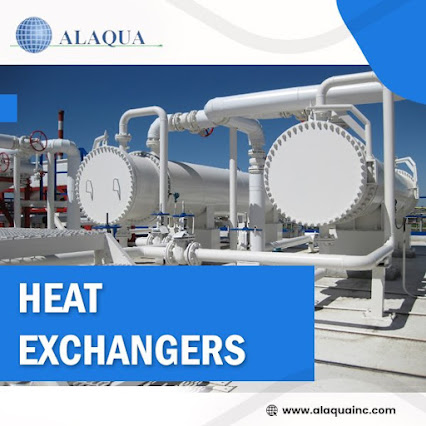
 A heat exchanger is a device that allows heat to be transferred from one medium to another quickly and efficiently. It is used to heat or cool a certain medium by utilizing another in the area. The technique is based on the fundamental science of heat transport from a hot to a cold medium. While anyone can change the temperature of a material by making physical contact with it or combining it with another liquid. A heat exchanger allows heat to be transferred without making physical contact.

It is made up of separate elements with a strong thermal conductivity that operate as heat transmission elements. They divide the two fluids while allowing heat to be transferred efficiently. The real heat transfer occurs in reaction to the relative flow of liquid in these separated parts, regardless of the size and shape of the exchanger. For effective heat transfer between the medium, a heat exchanger might have a contemporaneous, counter, or cross-flow arrangement.


Heat exchangers with the opposite fluid flow direction are classed as counter-flow heat exchangers. Shell and tube, plate, double-pipe, one-phase, or multi-phase counterflow heat exchangers are all options. Alaqua is processing equipment such as evaporator, distillation, crystallizer, spray dryer, solvent recovery, and heat exchanger equipment supplier worldwide based in the USA.

Different Types of Heat Exchangers

Heat exchangers are typically classified into two categories based on the flow arrangement: counter-flow and parallel flow heat exchangers, which are referred to as crossflow and inline, respectively.

Inline

Hot and cold fluids run in parallel in this type of exchanger. They're called counter-current counterflow heat exchangers if they move in the other direction, and are called parallel or co-current heat exchangers if they move in the same direction.

Due to the temperature differential between the fluids being uniform throughout fluid routes and the exchanger, counter-flow heat exchangers are more efficient than parallel exchangers.

Crossflow

The fluid in the cold and hot parts of a crossflow heat exchanger flows perpendicular to each other. This type of heat exchanger is more efficient than counterflow heat exchangers, and the entire heat exchanger can be contained within a box. The logarithmic mean temperature difference (LMTD) of this kind is larger than that of the inline type.

If you like this post you can check our latest blog on why sometimes it’s better to buy a new heat exchanger than keep the old one. Let's continue to our blog.

Counter Flow Heat Exchanger

Heat exchangers with counterflows use flows that flow in the opposite direction of each other. Heat exchangers with counterflow layouts include shell and tube and twin pipes. A counter-flow architecture is the best design for a shell and tube or double-pipe exchanger because it provides for the most heat transfer between the fluids. Counterflow is more efficient than parallel flow, and the temperature of the cooling fluid outflow can be higher than that of the warmer fluid inflow.

Differences Between Parallel and Counter Flow Heat Exchangers

In terms of flow direction and heat transfer, parallel and counter flow heat exchangers are distinct. Both inlets are on the same side in parallel exchangers, while all of the outlets are on the other side. The intake has the greatest temperature differential, which reduces to the smallest at the outlets. When compared to the counter flow, it is the polar opposite.

As previously stated, the basic function of all heat exchangers is to transfer heat from hot fluids to colder fluids and to exchange energy between them. The heat transfer rate is greatly influenced by the surface of the plates, pipes, or whatever separates the fluids in a heat exchanger, and by increasing it, we may get a high rate of heat transfer for heavy-duty applications.

The amount of heat transfer and the fluids' output temperature determine the size and type of heat exchanger. The hot fluid output temperature is critical if the device's purpose is to cool, while the cold fluid output temperature is critical if the device's goal is to heat.

Merits and Demerits of Parallel Over Counter Flow Heat Exchangers

Parallel-flow arrangement: The hot and cold fluids enter from the same end, flow in the same direction, and exit from the same end in a parallel-flow system.

Counter-flow arrangement: Fluids enter at opposite ends, flow in opposite directions, and exit from opposite ends in a counter-flow arrangement.

A counter-flow heat exchanger transfers more heat than a parallel flow heat exchanger under the same conditions. The two heat exchangers' temperature profiles reveal two serious flaws in the parallel-flow design.

  • Thermal strains are created by the considerable temperature differential at the ends.

  • The temperature of the cold fluid leaving the heat exchanger is never higher than the temperature of the hot fluid at its lowest point.

When two fluids must be brought to almost the same temperature, a parallel flow heat exchanger is advantageous.

Alaqua is processing equipment including heat exchanger makers and suppliers worldwide to various environmental, pharmaceuticals, chemical, food, and power generation industries. We offer equipment fabrication, installation and commissioning, troubleshooting, retrofitting, personnel training, and field services for processing equipment as well. Request a quote today!


Thursday, April 28, 2022

Why Sometimes It’s Better To Buy New Heat Exchanger Than Keeping Old One

Things aren't made the same way they used to be" is a widespread adage that can be used to a variety of appliances, heat exchanger makers, and other products that are no longer built to the same high standard as they were 20, 30, or 40 years ago. While you can brag about your old toaster oven that constantly browns your English muffins to perfection, there are times when keeping certain pieces of equipment in use is actually counter-productive.


The truth is that the new ones have the potential to be significantly superior in a variety of ways. In addition to consuming too much energy, aging equipment has a higher rate of downtime because failures occur more frequently and require more maintenance. When looking for a new solution that can work for longer periods of time without requiring service, this lost time must be considered. In some cases, upgrading to a new unit to take advantage of the increased features offered can be the best option.

When is it a smart idea to invest money in new equipment when you already have one that works? Most plant managers who work on a tight budget look for ways to save money wherever they can and follow the mantra, "If it ain't broke, don't fix it." This isn't always the case, especially when it comes to the equipment used in the chemical process industries. When you consider all of the new developments and technology that have been discovered and implemented in the last decade, newer equipment can not only improve the performance of your process but can also improve efficiency and productivity to the point where the long-term benefits of a new unit often outweigh the capital expenditure.

Heat exchangers are a great example of this type of equipment. Corrosion, fouling, and thermal expansion are all common problems in heat exchanger functioning. These issues have an impact on the units' reliability, but their inefficiency can also contribute to the lengthening of process durations. Consider how much more efficient and profitable your process would be if you could run five batches in the time it took to run four before. This is the kind of efficiency that new, high-performance heat exchangers can provide.

Let's take a look at the key models utilized in CPI operations before we discuss what's superior about new heat exchanger designs. There are a variety of heat exchanger options available, and some forms are more suited to certain uses than others. While there are other variations, the three primary categories are as follows:

Shell-and-tube heat exchangers: Due to their adaptability, they have remained a steady cornerstone in the chemical process sector. A bundle of tubes containing fluid runs longitudinally through a shell containing a second type of fluid in the design. The shell fluid runs over the tubes, allowing heat transmission to occur.

Plate-based heat exchangers: They use plates to expose fluids to a wider surface area than other systems. Welded-plate and gasketed-plate versions are the two most popular forms of plate HEs. Their compact designs allow them to fit into tight locations, and the materials used in their production (typically stainless steel or alloy) allow them to be utilized in applications requiring high pressure and temperature tolerances.

Coil/Spiral heat exchangers: In this design, two fluids flow in opposite directions through a set of helical tubes. These units have a small design and provide great thermal efficiency in demanding applications. They also have a lower fouling tendency, making them a viable option for tough services.

There are many more types of heat exchangers than the three described above, but this provides you an idea of the three most common. So, returning to the topic at hand, why should you consider buying a new heat exchanger if your old one is still functional?

Better Construction Material

Many advancements have been made to today's construction materials. Old heat exchangers produced more than two decades ago were almost certainly made of carbon steel or copper tubes, which were the most common metals at the time. Fast forward to today's process conditions, and those MOCs are no longer enough for corrosion protection, especially when dealing with some of the corrosive compounds used in many current applications. Additionally, some older equipment that could not tolerate the corrosive environment of a certain process was designed using thickened material to compensate for the inevitable corrosion. While some may consider this a creative solution, it's more or less a hack to get some use out of equipment that would otherwise be regarded unsuitable for the task. There are alternative blends of metals and totally new metals that are engineered to handle the corrosive properties of modern chemicals, so materials don't need to be thickened for corrosion. Furthermore, the new materials are lower in weight and more dependable, resulting in increased efficiency.

Secure Designs

Another aspect to think about is safety. Newer equipment has greater safety requirements than older equipment since it is built with the latest and finest materials and designs. Some older heat exchangers, in fact, do not fulfill the environmental or safety standards that have been established in recent years.

To overcome the shortcomings of their predecessors, new advancements in heat exchanger design have also been made. Unnecessary tension on the heat exchanger can lead it to break over time in operations where thermal expansion happens at different rates. Flow-induced vibrations in shell and tube heat exchangers, for example, are a red flag in terms of safety. While expansion joints can help with these problems, newer designs, such as a floating tube sheet-style exchanger that is fixed on one end but can move within the shell on the other, offer superior options. The unit is protected from damage during thermal expansion by the spring action that has been enabled. Sealing technology has progressed as well, making units safer from cross-contamination.

Additional Unique Application Options

Some heat exchangers may not have been considered for CPI equipment in the past, but improvements in manufacturing and design have made them a viable solution for a wide range of demanding chemical process applications, including severe service processes and pharmaceutical applications that require an extra level of reliability and compliance.

The QVF coil-type heat exchanger, for example, is an example of such a machine that solves an issue for the pharmaceutical sector. The material, which is made of inert borosilicate glass 3.3, has high corrosion resistance as well as excellent process visibility. The tube coil is fused to the shell to prevent cross-contamination between the two fluids, resulting in a seal-free solution. For some applications involving difficult-to-process, highly viscous fluids, mixing is an interesting alternative. It can efficiently boost heat transfer and prevent product burning by including a mixing component within the heat exchanger.

While improving your operation's efficiency will cost you money, it's also crucial to assess how much it would cost you if you don't make those improvements. The approach to improving the performance of your process can be to replace your existing heat exchanger with a new one, which features safer designs, improved materials, and better options to maximize efficiency and uptime. With the use of new technology and customizable designs, you can have a solution tailored to your exact needs.

Alaqua is processing equipment including a heat exchanger equipment supplier worldwide based in the USA. Along with equipment, we also offer various services for processing equipment. Get a quote for your processing equipment and services today!


Thursday, April 14, 2022

Features of Evaporators Used for Vegetable Cold Storage | Alaqua Inc

Different types of heat exchangers are required for various applications. Lower fins per inch (FPI) are frequently used in sectors such as pulp and paper to reduce airside fouling and make cleaning easier. Weight is a consideration in other applications, such as the military, and it influences material choices. In this piece, we'll look at some of the unusual design features frequently added when creating heat exchangers for the refrigerated storage of potatoes, onions, beets, and other vegetables. Alaqua offers processing equipment including cold storage evaporators and processing equipment services worldwide based in the US.

Multi Effect Evaporator


End-User Customization Capability

To avoid spoilage, commercial agriculture storage warehouse cooling systems frequently operate at temperatures just above freezing. Frosting on coils is a serious worry because of the low temperatures and humidification, as a result, many businesses employ electric heating components to prevent frost and ice from forming on evaporators. Knowing this, some companies such as Alaqua add heating notches in their coils to allow these devices.

If heater notches are required, customers can choose from three design possibilities. The first involves punching heater notches into the fins themselves with a special die. To accommodate the heaters, strategically positioned dead tubes in the coil can be utilized, or a split fin pack can be employed, which consists of two fin packs constructed into one casing with enough space between them to fit the heaters.

For contaminant-free meals, use clean, cleanable equipment

Prior to delivering items out to the customers, providers totally degrease them with a vaporized degreasing solution. Customers will obtain a clean, ready-to-use heat exchanger that is free of impurities in this manner.

While coils may appear to be in perfect condition at first, they will not last long in the field. Due to the presence of dirt and other particulates, agricultural storage coils must be constructed to be easily cleaned in the field. End-users will appreciate design decisions such as thicker fin gauges to withstand pressure washing and increased space between fins, which allow them to clean coils without removing them from service. Lowering the FPI helps to reduce the icing issues discussed previously.


Equipment Supplier For Industry

Corrosion-resistant materials to lessen the need for replacement

Coatings are commonly used in the fertilizer sector due to the presence of a variety of chemical and environmental corrosives such as ammonia from fertilizers. E-coat, or electrocoating, is used in the industry since it's thin (about 1 mil dry film thickness) and reduces heat transfer by less than 1%. Furthermore, when combined with a hydrophobic topcoat, condensate water - which often contains chemicals - beads off of the fins, reducing contact with equipment and the risk of corrosion.

If you like this blog, please also check out our latest blog on what equipment is used for food processing. 

Fin stock that has been pre-coated with a blue corrosion-resistant lacquer, used in the condenser, is another possibility. Pre-coated fin stock, unlike the post-build coatings solely protects fins and is best suited for settings where corrosives are present in the airstream but not so much on the fluid side. Pre-coated fin stock is a cheaper alternative to the above coatings, but it is also less robust, making it unsuitable for harsh corrosive environments.

A third option is Here site P-413, a baked-on phenolic coating that protects against a wide range of acids, solvents, and inorganic salts. Because of its high cure temperature and unique chemistry, Here site P-413 is a popular choice for commercial crop storage. Heat transfer is reduced by 1% using Here site P-413, similar to an e-coat. It has a dry film thickness of roughly 1 mil, which is similar to that of the other products.

However, each application is unique, with some requiring substantially less coating expenditure and others far more. There are a number of tools available to assist in determining the optimal coating package for a certain application.

Braze joints of superior quality for long-term leak-free operation

And, it's widely assumed in the industry that a higher silver content leads to a more ductile joint, which is less vulnerable to stress and vibration. Then, before shipping, coils should be thoroughly tested with dry nitrogen to confirm that they satisfy specifications and will not leak in the field. Higher-silver-content braze rod also allows to combine of incompatible metals more easily, broadening the material combinations that can be utilized and boosting the chances of being able to manufacture exactly the part customers require. Alaqua is processing equipment such as solvent recovery, distillation, evaporator, evaporator condenser, crystallizer, heat exchanger, and spray dryer supplier worldwide. Along with supplying processing equipment, they also offer services for the processing equipment such as installation and commissioning, troubleshooting, field services, etc. Do you employ heat transfer for agricultural storage and want to discover if these coil designs can help you improve efficiency? Please contact Alaqua and get your queries answered…!

Thursday, March 3, 2022

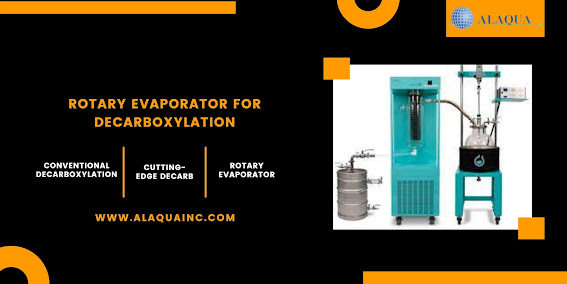
Choosing the Right Rotary Evaporator for Decarboxylation

 Cannabis and hemp laws are slowly loosening around the world after decades of prohibition. In just a few years, wholesale legislative reforms in Canada and the United States have converted an illegal market into a multibillion-dollar legal economy. Cannabinoid-based products, particularly cannabidiol (CBD) oils, have become high-value commodities. Alaqua is processing equipment including evaporators supplier worldwide based in the US.

The cannabis and hemp industries are evolving at a breakneck pace, with producers and retailers alike competing for a competitive edge in an already crowded market. Raw vs. decarbed CBD oil is one of the most important distinctions in the sale of CBD products.

Decarboxylation is a natural part of the cannabis-consuming process. It discusses particular procedures for extracting desirable natural chemicals from plants in laboratory settings. This post will go over the process of decarbing cannabis in greater detail, as well as provide some advice on how to choose the best decarboxylation system.


What is Decarboxylation?

The transformation of CBDA (Cannabidiolic Acid) or THCA (tetrahydrocannabinolic acid) into THC (tetrahydrocannabinol) or CBD (cannabidiol) via heating and drying is referred to as decarboxylation in the cannabis extraction process. In scientific terminology, decarboxylation is a chemical reaction that involves the removal of a carboxyl group using heat and/or chemicals.

Instruments for Conventional Decarboxylation

Traditional decarboxylation and solvent recovery systems are complex, modular systems made up of several interconnected instruments. Decarboxylation alone necessitates a large reactor with a chiller, a condenser chiller, and a vacuum pump. As a result, consumers can decarb cannabis for extended lengths of time (8-10 hours).

Other decarbing equipment, such as vacuum ovens, can take much longer (14-24 hours) and have a restricted capacity. These setups are costly, and they generally necessitate regular operator engagement in order to produce the highest value results.

Due to heat loss and inadequate heat transmission, reactor/chiller decarb systems require a long time to decarb since they use thermal fluid to heat the extract to the appropriate decarb temperature (250 °F or 121 °C).

Evaporators with Cutting-Edge Decarb

Evaporation technology for decarboxylation and solvent recovery beats conventional decarb systems on nearly every front, thanks to ground-breaking direct-cooling technology and continuous feeds to maintain vacuum conditions during extraction procedures.

They can decarb equivalent volumes of cannabis oils in just under 2 hours and offer consistently higher returns on investment in practically every regard. This is made feasible by an efficient heating mantle design that quickly reaches optimal decarb temperatures and maintains heat. With an efficient heating mantle, actual volume evaporators, and the world's most efficient intelligent self-cooling technology, continuous decarboxylation of large volumes of sample materials at unprecedented scales may be initiated with a single operation.

Rotary Evaporators For Lab

Lyman C. Craig, a scientist from the United States, could not have predicted the impact of his invention when it was first introduced in 1950. Rotary evaporators are still used in most modern chemistry laboratories more than 60 years later to meet the needs of scientists all around the world.

Rotovaps are used for fast distillation of mixed solvents, efficient drying of samples, faster freeze-drying sample preparation, chemical synthesis under reflux, natural compound extraction, and concentration due to the wide range of condensers available.

Many research and development applications include evaporation as a stage. Organic synthesis and the extraction of inorganic contaminants both need the concentration of solutions by distilling the solvent and removing low and higher-boiling or solid residue. The chemical, pharmaceutical, petrochemical, and food sectors all employ evaporators outside of research labs.

Working Principle Of Rotary Evaporator

A motor unit, a heated fluid bath, a vacuum system, a vapor duct, a condenser with either a coil passing coolant or a 'cold finger,' a condensate-collecting flask, and a mechanical or motorized mechanism are the main components of a rotary evaporator. The evaporation vial or flask containing the user's sample rotates in a rotary evaporator. The axis for sample rotation is the vapor duct, which is a vacuum-tight conduit for the vapor being drawn off the sample.

The evaporator system's pressure is significantly reduced by the vacuum system. A water aspirator with a trap immersed in a cold bath for non-toxic solvents can be as simple as a regulated mechanical vacuum pump with a refrigerated trap, or as sophisticated as a regulated mechanical vacuum pump with a refrigerated trap. The sample is heated in a hot fluid bath (often water). Depending on the evaporation goals and any propensities that the dissolved chemicals might contribute to the mixture, the condenser utilized in rotary evaporators can be simple or complex. The distilling solvent is caught in the condensate-collecting flask, which is placed at the bottom of the condenser. The evaporation flask is swiftly removed from the heating bath thanks to a motorized mechanism.

Precautions

Although evaporation is a simple process, it is not without risk. For example, implosions can occur when using glassware that has faults, and explosions can occur when concentrating unstable contaminants during evaporation. Avoid tangling loose clothing, hair, or necklaces in rotating parts.

Applications of Rotary Evaporator

The rotary evaporator has a wide range of industrial uses, including crude oil processing, cannabinoid separation, molecular cooking, flavor and aroma production, and more. Rotary evaporators can be used in a variety of industries, whether you're in R&D or manufacturing.

Academia: In academia, solvent re-use is extremely significant. For this and many other applications, including solvent recycling, concentration, and distillation, the rotary evaporator is the best option.

Chemical: Concentration, Drying, and Solvent Recycling are just a few of the applications that an industrial Rotavapor may accomplish in the chemical industry.

Pharmaceutical: The pharmaceutical business requires an evaporation solution that may be used in a variety of situations. For gentle evaporation, the rotary evaporator is the optimum choice: concentration, drying, re-crystallization, and synthesis.

Alaqua supplies processing equipment such as crystallizer, solvent recovery, distillation, heat exchanger, spray dryer, and evaporators made in USA. They also offer installation and commissioning, retrofitting, troubleshooting, personnel training, and various other services for the processing equipment. Contact them today for more queries related to their processing equipment and services!


Tuesday, February 22, 2022

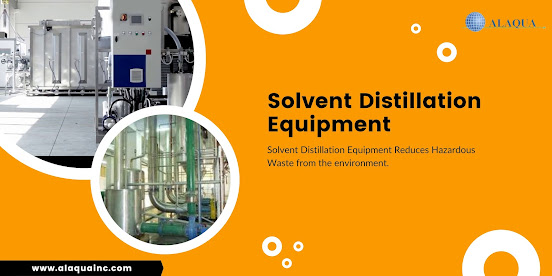
How Solvent Distillation Equipment Reduces Hazardous Waste?

The waste created by manufacturing facilities may be a burden on the environment, especially if the material is dangerous. To properly dispose of hazardous waste, companies must adhere to local, state, and federal environmental rules. Solvent distillation equipment allows businesses to accomplish just that while also recovering wasted raw materials.

Distillation is the most cost-efficient and ecologically friendly way of dealing with hazardous waste containing wasted solvents. In contrast to traditional fuel mixing, purified solvents are returned to the industry to extend the product's life, minimizing and reusing hazardous waste. This is how you do it.


Best Solvent Distillation Equipment Provider In The USA


How does Solvent Distillation work?

Liquids in hazardous waste are filtered and combined in a blending tank when it arrives at a solvent distillation facility. After that, they're sent to a solvent recovery still.

To create steam, solid wastes are thermally processed at 1,500 degrees Fahrenheit. After that, the steam is used to run the recovery stills.

The solvent distillation process starts at the solvent recovery still:

  • Solvent waste is received and sorted. They're also subjected to a fingerprint examination.

  • Pumping and filtration of liquid drums are conducted.

  • Solvents are pumped to the distillation unit once filtration has been completed.

  • The fractionation column fills with vaporized solvent vapors.

  • The solvent is cooled by the heat exchanger.

  • The solvent is poured into a completed product tank when it has cooled.

  • The product is subsequently packed and sent back to the industry in barrels and totes.

How Does Distillation Equipment Work together?

The solvent distillation process involves the application and removal of heat to separate a liquid or vapor combination into its component fractions of desired purity.

A boiling mixture's vapor is richer in low boil point components during the solvent distillation recovery process. The liquid condensate is ready to be sold back into the industry once the vapor is cooled and condensed.

The non-vaporizing component of the original mixture stays at the bottom of the recovery still. This component is especially significant since it may be utilized as a source of alternative fuel in some industries.

So, how do distillation equipment collaborate to reach this modern-day recycling goal?

When a corporation manufactures and transfers hazardous waste to a solvent distillation plant, the garbage is identified and sorted using fingerprint analysis.

Solvents are piped to the distillation unit after liquid drums are pumped and filtered. Volatile solvent vapors extend into the fractionation column here.

The solvent is cooled and delivered to a final product tank through a heat exchanger. The product is subsequently packed and sent back to the industry in barrels and totes. Solid wastes are thermally processed to produce steam, which is then utilized to power the recovery stills.


Best Heat Exchange Provider In The USA


What Solvents Can Be Recycled Using Distillation Equipment?

Solvents are molecules that have the ability to dissolve solutes or other molecules. A solvent is a substance that can be solid, liquid, or gaseous. The solute molecules get uniformly dispersed throughout the solvent when the molecules of a solvent pull apart the molecules of a solute. At this point in the operation, the solvent and solute can only be separated by heat or another chemical procedure.

Solvents may be recycled, reprocessed, and reused in large quantities. The following are some examples of solvents that are often recycled:

  • Aliphatic

  • Aromatics

  • Halogenated hydrocarbons

  • Alcohols

  • Ketones

  • Esters

Water is among the most common and widely used solvents available.

Recycling Solvents Benefits

When a product's life cycle is extended, trash is transformed into a useful resource once again. Solvent distillation creates a closed-loop recycling system when paired with energy recovery, guaranteeing that nothing is wasted.

When hazardous waste materials are converted to energy and utilized to power solvent recovery stills, a company's carbon footprint is significantly decreased.

Because fewer truckloads of materials are transported off-site for secondary recycling at cement kilns, solvent distillation and the closed-loop recycling process help to prevent further pollution.

Indeed, for every 100 gallons of common solvents distilled, 30 gallons of still bottoms are produced, which are then combined with ash. You may save money on transportation and minimize your carbon footprint by reducing the number of truckloads that go to the closest cement kilns.

The following are some of the advantages of reusing your used solvent by distillation:

  • Purchase expenses for virgin solvent are lower.

  • Spent solvent disposal expenditures are reduced.

  • Due to a reduction in the amount of hazardous waste created, the status of the hazardous waste generator may change.

How It Helps The Environment?

Solvent distillation is a crucial procedure for reducing the quantity of hazardous waste that is disposed of in the environment. Solvent distillation guarantees that waste becomes valuable again by extending the life of the product.

When hazardous waste materials are converted to energy and utilized to power solvent recovery stills, it also minimizes a company's carbon impact.

Solvent distillation also reduces pollution by preventing the production of additional trash. When evaluating a company's carbon footprint, waste transportation is one of the most influential operations. Solvent distillation considerably reduces the number of truckloads used to transfer materials off-site for secondary recycling at a cement kiln.

When used as part of a True Closed Loop Recycling system, solvent distillation minimizes hazardous waste even further. This system consists of a waste solids energy recovery process and a waste solvent distillation process.

Almost nothing is wasted when using a Closed Loop Recycling system. 30 gallons of still bottoms are created for every 100 gallons of solvents distilled and combined with ash. This procedure guarantees that all garbage is recycled and avoided landfills. This also assures that the company complies with all local, state, and federal standards, while also reducing waste and contributing to environmental preservation.

Conclusion

Solvent distillation equipment plays a vital role in minimizing the quantity of hazardous waste disposed of in landfills. Every piece of equipment works together to extend a product's life, restoring its value.

The benefits of solvent distillation systems are multiplied when used as part of a closed-loop recycling system, allowing a corporation to attain the maximum level of sustainability and corporate responsibility.

Alaqua is USA based processing equipment such as the evaporator, heat exchanger, crystallizer, solvent recovery, spray dryer, and distillation equipment supplier worldwide that also offers their services. They have 25+ years of experience in processing equipment products and services. Contact them to get processing equipment, information and queries today!